Advertisement
Geospatial analysis demands tools that can handle massive datasets with speed and efficiency. Traditional methods often struggle with slow performance, making large-scale calculations difficult. Geopandas, an extension of Pandas for spatial data, and Polars, a modern DataFrame library, provide a powerful alternative. Together, they enable seamless workflows that integrate tabular and spatial operations.
Analysts and developers can generate vast numbers of transects rapidly, reducing costs and improving productivity. This efficiency accelerates decision-making in fields such as environmental research, infrastructure monitoring, transportation, and urban planning. By adopting these tools, organizations gain a competitive edge in data processing. The following sections explain how Polars and Geopandas deliver scalable, accurate, and transformative geospatial workflows.
Transects are straight-line paths across a surface, widely used for identifying patterns in geospatial data. They play an important role in land use studies, environmental research, and urban planning. Analysts rely on transects to evaluate habitat distribution, measure distances, and interpret topographic features. However, producing millions of transects from large datasets can be slow and resource-intensive.
Traditional workflows often take hours due to limited memory efficiency and sluggish operations. Polars and Geopandas address these challenges by combining high-speed tabular processing with advanced spatial functions. Polars leverages parallel execution to handle massive tables, while Geopandas manages shapefiles and geospatial layers. Together, they form a robust framework that makes projects more reliable, efficient, and adaptable. This integration enables the rapid creation of transects with accuracy and performance that were previously impossible in earlier systems.
Polars is designed for speed and efficient memory use. Built in Rust, it delivers faster execution than Pandas while supporting parallel processing across multiple cores. It significantly reduces calculation times. Its lazy evaluation feature further optimizes operations by planning them before execution, saving resources and avoiding unnecessary work.
The library's Arrow-based columnar storage also enhances efficiency, enabling the processing of massive datasets without overwhelming system memory. Developers benefit from its clear syntax and familiar DataFrame interface, making adoption straightforward within Python workflows. Polars also manages complex queries with ease, scaling to billions of rows. For geospatial projects that demand extensive data transformation before generating transects, this performance is critical.

Pandas is extended with geospatial features by Geopandas. It offers data structures such as GeoDataFrame and GeoSeries. Geometries, such as points, lines, and polygons, are stored in these objects. Geometric operations, overlays, and spatial joins can all be done directly by analysts. It simplifies tasks like projections, intersections, and buffering. For geometry operations, Geopandas uses Shapely and Fiona.
For more complex tasks, it also integrates with libraries like Rasterio and Pyproj. Analysts can efficiently prepare base layers with Geopandas. It enables the handling of vector data for spatial queries and mapping. Results can be quickly visualized thanks to its plotting features. Geopandas supports the Shapefile, GeoJSON, and KML file formats. Due to its adaptability, it can be applied to projects across various industries. It successfully connects tabular and spatial workflows when paired with Polars.
A workflow that strikes a balance between speed and spatial depth is produced by integrating Polars and Geopandas. Polars swiftly processes big tables with coordinates or attributes. Geopandas uses geometries to apply spatial functions. The outcome is a setting that enables the quick computation of millions of transects. In Polars, data preparation begins with transformations such as joins, groupings, and filters. After optimization, the output is transferred to Geopandas for geometric operations. It ensures that only the necessary information is computed spatially. Task division reduces overhead.
Data exchange between the two libraries is possible through Pandas or Arrow bridges. As a result, analysts steer clear of bottlenecks that are typical in conventional systems. The process facilitates scalability, iteration, and experimentation, allowing for continuous improvement. Teams can quickly regenerate transects and change parameters. This integration supports large projects without sacrificing accuracy.

Transects play a vital role across many industries. In urban planning, they support land-use evaluation and road alignment studies. Environmental researchers apply them to monitor habitats and track deforestation, while transportation analysts rely on transects for route modeling and network efficiency. Utility companies utilize them to study grid layouts and pipelines, while climate scientists employ transect analysis to examine coastal erosion.
Generating millions of transects enables large-scale simulations that can be run in seconds, a task once impractical with older methods. By combining Polars and Geopandas, these applications become both efficient and cost-effective. Organizations save time, conserve computing resources, and quickly test multiple scenarios. Automated workflows further ensure consistency and transparency, making transects an indispensable element of modern geospatial analytics.
Efficient implementation requires attention to both workflow design and technical setup. Start by installing the latest stable versions of Polars and Geopandas. Configure Polars' parallelization settings to match available system resources, and optimize data types to reduce memory usage. Perform filtering and transformations in Polars before transferring data to Geopandas, limiting spatial operations to only what is necessary.
Vectorized functions further shorten processing times, while large datasets can be divided into smaller batches for easier handling. Storing data in Parquet or similar formats improves retrieval speed and efficiency. Collaboration benefits from reusable scripts and clear documentation, while visualization facilitates the quick and efficient validation of results. Testing with subsets of data enables the early detection of issues, thereby strengthening reliability. By following these practices, analysts build pipelines that deliver scalable, accurate, and high-performance geospatial workflows.
The integration of Polars and Geopandas transforms geospatial data processing by enabling the rapid generation of transects at scale. Analysts gain powerful tools for environmental studies, infrastructure planning, and urban development. However, organizations get benefits from combining spatial intelligence with high-speed tabular workflows. The result is greater transparency, reliability, and performance. By applying best practices, teams avoid common bottlenecks and maintain seamless implementation. This guide unlocks faster insights and more innovative solutions across various industries. As datasets continue to grow, optimized tools like Polars and Geopandas will remain essential for driving progress in modern geospatial analytics.
Advertisement

Microsoft and Nvidia’s AI supercomputer partnership combines Azure and GPUs to speed model training, scale AI, and innovation

Discover seven powerful ways AI helps manage uncertainty and improve resilience in today's fast-changing business world.

Discover AI’s latest surprises, innovations, and big wins transforming industries and everyday life.

Learn how advanced SQL techniques like full-text search, JSON functions, and regex make it possible to handle unstructured data

Create an impressive Artificial Intelligence Specialist resume with this step-by-step guide. Learn how to showcase your skills, projects, and experience to stand out in the AI field
Can $600 million change the self-driving game? This AI freight company isn’t chasing hype—it’s delivering real-world results. Here's why the industry is paying close attention

Learn how AI innovations in the Microsoft Cloud are transforming manufacturing processes, quality, and productivity.

Meta is restructuring its AI division again. Explore what this major shift in the Meta AI division means for its future AI strategy and product goals

Apple may seem late to the AI party, but its approach reveals a long-term strategy. Rather than rushing into flashy experiments, Apple focuses on privacy, on-device intelligence, and practical AI integration that fits seamlessly into everyday life
What happens when energy expertise meets AI firepower? Schneider Electric and Nvidia’s partnership is transforming how factories are built and optimized—from virtual twins to real-world learning systems

How to use a Python For Loop with easy-to-follow examples. This beginner-friendly guide walks you through practical ways to write clean, effective loops in Python
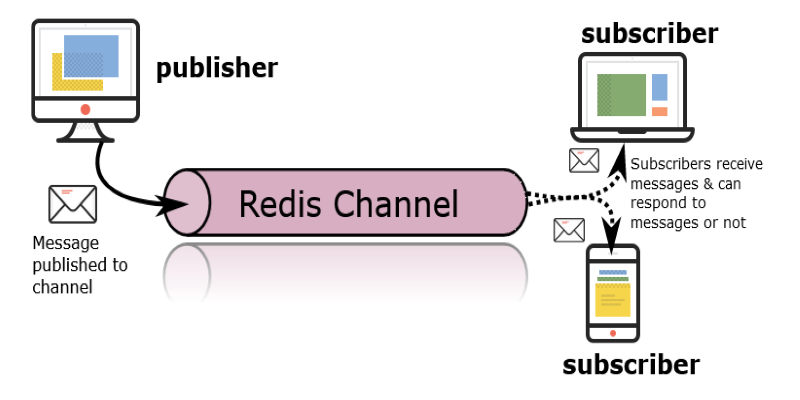
Need instant updates across your app? Learn how Redis Pub/Sub enables real-time messaging with zero setup, no queues, and blazing-fast delivery