Advertisement
Apple doesn't rush trends. It never has. While tech giants compete to showcase generative AI tools and virtual assistants, Apple has stayed relatively quiet. Other companies chase headlines and user excitement with chatbots, large language models, and beta tools. Apple's silence has stood out.
But calling that a delay might miss the point. Apple tends to wait, not because it's behind, but because it often moves differently. What looks like slowness might be a deliberate pause — one that sets it up to offer something better aligned with how people use tech.
Apple's playbook isn't about being first. It's about being ready. The iPhone wasn't the first smartphone, but it redefined what phones could be. The iPad wasn't the first tablet, but it made tablets practical. Even though the Apple Watch arrived years after other smartwatches, it quickly became the standard. Apple steps in once early adopters have tested the waters and the noise has settled.
This pattern gives Apple time to understand what works, what doesn’t, and what users want — not just what looks exciting on a demo stage. That same pattern seems to apply to AI. Instead of chasing viral AI tools, Apple is working behind the scenes to develop features that feel more polished, integrated, and focused on usability.
Other companies showcase AI as a standalone product. Apple tends to weave tech into the user experience so deeply that it becomes invisible. That doesn't win hype cycles, but it often creates longer-lasting value. If history is any guide, Apple is likely waiting for the AI trend to mature before it introduces something that feels like it was always meant to be there.
AI’s current wave is largely built on cloud-based services — many of which rely on user data, server-side processing, and tracking behavior across apps and devices. That model doesn’t fit Apple’s privacy-focused stance. For years, the company has invested in running machine learning tasks directly on the device. That’s not just a technical choice; it’s a trust-based decision.
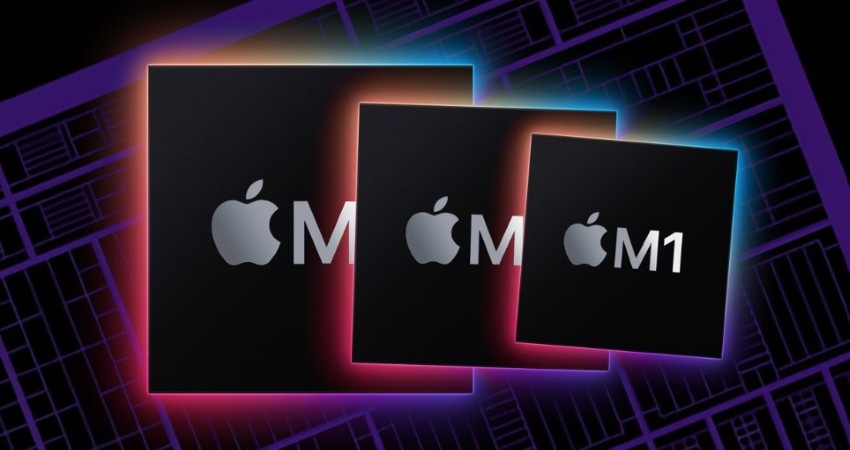
Apple’s custom silicon — like the Neural Engine in its A-series and M-series chips — is built to support machine learning locally. Features like on-device dictation, Live Text, and Face ID are already using AI, but they don’t wear that label. They’re designed to be quiet helpers rather than showcase features.
This quieter approach helps Apple build AI in a way that fits its identity. Instead of marketing a chatbot or public-facing model, Apple appears to be embedding intelligence into everyday tools — the camera, keyboard, photo library, and more. Rather than asking users to interact with something new, Apple aims to improve what’s already familiar.
By focusing on local processing and respecting data boundaries, Apple may sidestep growing user concerns around privacy and surveillance. As AI becomes more powerful, trust will matter more than novelty.
Siri has fallen behind. Once a headline feature, it now often feels outdated and clunky. It struggles with context, can’t hold conversations, and frequently misfires. Compared to newer AI assistants, Siri feels less like a smart helper and more like a voice-activated button.
Still, Apple hasn’t abandoned it. Quiet moves suggest a rework is underway. Reports point to Apple developing its own large language model — codenamed “Ajax” — that could improve Siri’s capabilities without sending user data to the cloud. The goal isn’t to turn Siri into a chatbot but to make it more useful and responsive in daily life.
This could mean better integration across apps, smarter command handling, and a clearer understanding of context. Instead of asking Siri the weather three different ways, you might ask once and get exactly what you meant. Instead of rigid commands, Siri might understand tone, timing, and intent.
If Apple can pull this off, Siri won’t need to compete with ChatGPT. It will just need to feel helpful again — a simple, trusted tool instead of a struggling feature.
Right now, the AI space is crowded. Companies race to release new features, launch tools, and capture attention. Much of what’s out there is experimental — impressive in the moment but not always useful over time. Apple seems uninterested in this kind of noise. That doesn’t mean it’s ignoring AI. It means it’s not in a rush to show its work until the pieces fit.
Apple’s hiring trends, acquisitions, and internal research suggest it’s investing heavily in AI — just not in ways that generate headlines. It’s more concerned with long-term integration than short-term buzz. This slower pace aligns with how Apple often approaches major shifts: quietly, carefully, and focused on usability.
By waiting, Apple avoids the risks of overpromising and underdelivering. It can study what users find helpful — and what they don’t trust. In a space where many are rushing to be first, Apple seems content to be right.
When it does roll out broader AI capabilities, it likely won’t be a flashy event. It will arrive as part of a software update, woven into tools people already use. And it may not even be labeled “AI.” That’s the difference in approach. Where others push technology, Apple prefers to polish it.
Apple might look late to the AI party, but it rarely competes on timing. It moves when it’s ready, not when the market expects it to. While others race to showcase what’s possible, Apple waits to deliver what’s reliable. The company isn’t ignoring AI — it’s just shaping it to fit its values. Privacy, integration, and ease of use come before speed. In the end, Apple’s silence may not signal delay, but patience. And when it does show up, it won’t be for applause. It’ll be because the tech is ready to work — without making a scene.
Advertisement

Discover seven powerful ways AI helps manage uncertainty and improve resilience in today's fast-changing business world.

Discover how 9 big tech firms are boldly shaping generative AI trends, innovative tools, and the latest industry news.

Explore ChatGPT's 2025 memory updates: how it works, benefits, control options, and privacy insight

What happens when energy expertise meets AI firepower? Schneider Electric and Nvidia’s partnership is transforming how factories are built and optimized—from virtual twins to real-world learning systems
Discover how observability and AIOps transform IT operations with real-time insights, automation, and smart analytics.

How to vibe code with confidence while keeping your applications safe. This guide explains how developers can stay in their creative flow and apply secure coding practices without slowing down productivity or losing rhythm

Learn key strategies for prompt engineering to optimize AI language models and improve response accuracy and relevance

Can machines truly think like us? Discover how Artificial General Intelligence aims to go beyond narrow AI to learn, reason, and adapt like a human
How to use a Python For Loop with easy-to-follow examples. This beginner-friendly guide walks you through practical ways to write clean, effective loops in Python

Explore statistical learnability of strategic linear classifiers with simple walkthroughs and practical AI learning concepts

Explore how Nvidia's generative AI suite revolutionizes the Omniverse, enhancing 3D simulations, automation, and efficiency

What happens when AI isn't just helping—but taking over? Amazon CEO Andy Jassy says it's already replacing jobs across operations. Here's what it means for workers and the wider industry