Advertisement
An Artificial Intelligence Specialist resume isn’t just a list of tools and projects. It’s a reflection of how you think, work, and apply advanced concepts to real-world tasks. Recruiters don’t just want to know that you understand neural networks — they want proof that your knowledge translates into practical outcomes. Whether you're just starting or updating years of experience, the way you present your background matters. This guide offers a clear, step-by-step approach to writing a resume that helps you stand out in the AI job market.
Your resume should start with a short objective — two to three lines that tell employers what you bring to the table. Keep it direct and aligned with your expertise. Instead of saying you’re seeking growth or opportunities, explain your focus. For example: “Artificial Intelligence Specialist with experience in model deployment and deep learning systems, interested in applying machine learning to large-scale business challenges.”
This section acts like a first impression. It should reflect your focus and ability without sounding generic. A sharp summary encourages hiring managers to keep reading.
AI is a highly technical field, so this section needs substance. Don’t list tools blindly. Instead, break them into logical groups — programming languages, frameworks, databases, and platforms. Make it easy to skim.
More importantly, show where and how you’ve used each skill. For example, if you mention TensorFlow, mention if you built a custom image recognition pipeline with it. This ties your technical strengths to actual outcomes, which hiring teams value more than a plain skill list.
Your work history should show how you've applied AI knowledge in practice. Go beyond listing duties and focus on results. "Improved forecasting model accuracy by 22% using gradient boosting," says far more than "Worked on predictions."
Every job entry should include the tools used, the goal, and what you accomplished. If your background includes roles outside AI, highlight transferable work such as data analysis, automation, or algorithm development. Even short-term projects or internships deserve a spot if they show real impact.
Hiring managers often look for formal training in fields like computer science, math, or statistics. List your degree, graduation year, and school, but don’t stop there. Include certifications from recognized platforms that show you’re keeping pace with current AI trends.
Courses like Deep Learning Specialization or Google’s ML Engineer certification show initiative and a solid grasp of AI theory and tools. If your education included research or large projects, mention one or two examples and what skills you used to complete them.
Whether you’re experienced or just starting out, projects are your strongest proof of ability. Choose two or three that align with the jobs you’re applying to.
For each one, write a brief summary that covers what the project aimed to solve, your role, the technologies used, and what the result was. “Built a recommender system in Python using collaborative filtering, increasing engagement by 25% in testing,” is far more useful than just saying “Movie recommendation project.”
If your projects are hosted on GitHub or part of public datasets, include links.
AI work often happens within teams. You’ll need to explain models, justify approaches, and work alongside people in non-technical roles.
Instead of listing soft skills in their own section, weave them into your experience. Mention when you worked closely with product teams, delivered presentations, or helped guide data collection strategies. Say how you responded to changing goals or adjusted models after stakeholder feedback. This shows you’re not just a coder, but a communicator who fits into collaborative environments.
A clean, readable format reflects the same logic and order you’d apply to AI workflows. Choose a layout with clear headings, balanced white space, and one or two font styles.
Your resume should follow a structure: contact info, objective, skills, experience, education, and projects. Limit it to one page if you’re early in your career or two if you’ve got several years of work. Avoid flashy colors or graphics — let your content speak for itself. Proofread carefully to eliminate typos or layout issues.
Applicant tracking systems (ATS) scan resumes for key phrases. To improve your chances, read each job description carefully and use the exact wording where it fits naturally. If the job lists “natural language processing,” and you’ve done NLP work, make sure to say so clearly.
You don’t need to rewrite the entire resume every time. Just adjust your summary, tweak your skill labels, and emphasize different projects based on the role. Tailoring shows attention to detail — a trait that AI work often requires.
If you’ve placed in AI contests, completed top-ranked online challenges, or spoken at meetups, include that. These recognitions show motivation and real-world interest in the field.
Whether it's a Kaggle competition, a hackathon project that got noticed, or a research poster accepted at a conference, this section gives your resume a little extra weight. Keep each achievement to one sentence and only include those relevant to AI or data science.
AI is constantly changing, and so is what hiring managers are looking for. Every few months, check your resume. Remove outdated tools or methods you no longer use. Add recent projects, certifications, or even short freelance work.
Keep a simple template you can update as you grow. This habit makes it easy to apply quickly when the right role shows up. And because the field moves fast, staying current makes a noticeable difference.
Writing a strong resume as an Artificial Intelligence Specialist means presenting your skills and experience clearly. Whether you've worked on large models or smaller tasks, focus on real outcomes, teamwork, and up-to-date knowledge. Use a simple structure, honest wording, and meaningful examples. Avoid flashy designs—clarity matters more. Keep your resume current, and you'll be prepared for top opportunities in the fast-moving AI field.
Advertisement
Microsoft and Nvidia’s AI supercomputer partnership combines Azure and GPUs to speed model training, scale AI, and innovation

Data scientists should learn encapsulation as it improves flexibility, security, readability, and maintainability of code

Explore how AI enhances employee performance, learning, and engagement across today's fast-changing workplace environments.

Compare Power BI vs Tableau in 2025 to find out which BI tool suits your business better. Explore ease of use, pricing, performance, and visual features in this detailed guide

Machine learning is redefining identity theft detection by recognizing behavioral patterns, preventing fraud in real time, and improving accuracy. Discover how this technology helps organizations stay ahead of digital threats while creating a safer online experience for users

Create an impressive Artificial Intelligence Specialist resume with this step-by-step guide. Learn how to showcase your skills, projects, and experience to stand out in the AI field

Discover why technical management continues to play a critical role in today's AI-powered workspaces. Learn how human leadership complements artificial intelligence in modern development teams

What happens when AI isn't just helping—but taking over? Amazon CEO Andy Jassy says it's already replacing jobs across operations. Here's what it means for workers and the wider industry

Domino Data Lab joins Nvidia and NetApp to make managing AI projects easier, faster, and more productive for businesses

Can machines truly think like us? Discover how Artificial General Intelligence aims to go beyond narrow AI to learn, reason, and adapt like a human
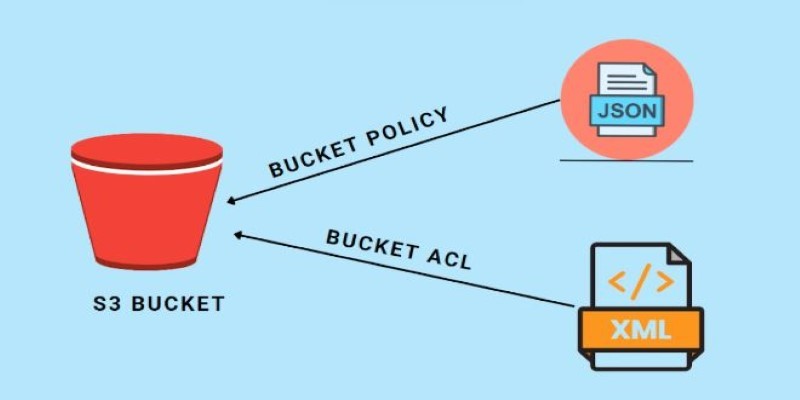
How AWS S3 buckets and security work to keep your cloud data protected. This guide covers storage, permissions, encryption, and monitoring in simple terms

How computer vision starts with low-level vision tasks like edge detection, denoising, and motion analysis—laying the foundation for higher-level visual understanding