Advertisement
AI has come a long way from being a futuristic concept to becoming an everyday tool that reshapes how we work. From writing code to automating customer service, artificial intelligence has found its way into nearly every corner of modern business. It's fast, it learns, and in many cases, it performs tasks better than people ever could.
With such capabilities, some are starting to ask: do we still need technical management at all? Has AI made leadership roles in engineering redundant? The short answer is no. And not because of nostalgia or tradition, but because AI changes the tools, not the responsibility.
Technical management has never been just about writing code or reviewing pull requests. It's about guiding a team toward a shared goal, often under shifting priorities and with limited resources. AI can generate answers, but it doesn't understand business context, team dynamics, or product trade-offs. Managers do.
AI tools can help automate tests, summarize reports, or even suggest fixes to bugs. But technical management involves decision-making that accounts for people, timing, and alignment. When a team needs to decide whether to ship a half-done feature under pressure or delay for quality, there's no AI model that can weigh in with the full picture. That judgment comes from experience and a grasp of the broader consequences—on user trust, internal morale, and future scalability.
Moreover, human leadership is essential when dealing with ambiguity. AI models excel at solving defined problems, but most of the issues technical managers face are fuzzy: unclear specifications, changing stakeholder demands, personality clashes, and questions about career growth. These are not problems that a predictive model can solve. They require a person who knows the people and understands the stakes.
There’s no doubt that artificial intelligence can boost productivity. It can summarize documentation, refactor legacy code, and even assist in design. But AI doesn’t take initiative, build relationships, or spot the subtle friction between two developers that might blow up into a team-wide problem. It doesn’t hold retrospectives or mediate between product and engineering when the roadmap goes sideways.
A manager acts as a bridge between departments, between people, between goals. In some companies, AI can suggest priorities based on data. But someone still needs to validate those decisions against company objectives, technical constraints, and what the team is actually capable of delivering.
AI also lacks long-term memory in the human sense. It doesn’t know that a team has tried and failed at a particular architecture twice before. It doesn’t recall that a client changed their requirements at the last minute in the previous project, leading to burnout. Technical managers carry this history. They learn from it and make better choices next time—not because an algorithm told them, but because they were there.
Another practical factor: AI can’t hold responsibility. When a release breaks something for thousands of users, you can’t ask the tool what went wrong and expect accountability. Managers are the ones who answer. They take responsibility, absorb pressure, and provide cover for their teams when things don’t go as planned.
One of the most overlooked parts of technical management is the human layer—the coaching, the mentorship, the tone-setting. People join companies for opportunity, but they stay because of leadership and culture. AI doesn’t onboard a junior developer who’s struggling. It doesn’t notice when someone’s losing motivation, and it doesn’t help individuals navigate their career paths.
Good managers recognize where people thrive. They offer feedback that’s timely and empathetic. They help team members stretch into new responsibilities or back off before burnout sets in. While AI might help prepare performance data or project histories, interpreting that data in a human way is still a task for people.
Culture is another domain where AI has no role. How decisions are made, how feedback is delivered, how the team handles conflict—all of these shape an engineering team's identity. Managers influence these every day, often in subtle ways by how they respond to setbacks, by how they celebrate wins, and by how they handle disagreement in meetings. AI doesn't set a tone. It doesn't create a space where people feel safe taking risks or asking questions.
And when things go wrong—which they always do, eventually—it’s management that steps up. In times of crisis, whether technical or interpersonal, trust matters. People don’t turn to software for clarity and reassurance. They look to a human being they respect and trust to guide them through.
That said, technical management does need to adapt. It’s not immune to change. Managers who ignore AI are doing their teams a disservice. But those who integrate AI thoughtfully—using it to handle routine tasks, summarize updates, and flag issues—can focus more on the parts of the job only humans can do.
What’s shifting is the balance of time and attention. Less time spent on task tracking, more time on strategy. Less manual oversight, more coaching. AI handles the repetitive; managers handle the relational and directional. And that’s not a loss—it’s a return to what leadership is supposed to be.
Some may feel threatened by AI stepping into traditionally technical roles, but it’s helpful to see it as a second brain, not a rival. The most effective technical leaders in the age of AI will be those who know how to use it without hiding behind it.
The same way calculators didn’t eliminate the need for mathematicians and GPS didn’t kill mapmakers, AI won’t replace engineering managers. It will change how they work—but not why they matter.
AI can speed things up and offer insights, but it can’t replace leadership. Technical management is still essential for guiding teams, making judgment calls, and keeping people aligned and motivated. While tools evolve, the human side of building software—decision-making, mentoring, and navigating challenges—remains unchanged. Artificial intelligence may grow more capable, but it won’t replace the need for someone to lead with context, empathy, and accountability. That’s why technical management still matters today—and always will.
Advertisement
Discover how observability and AIOps transform IT operations with real-time insights, automation, and smart analytics.
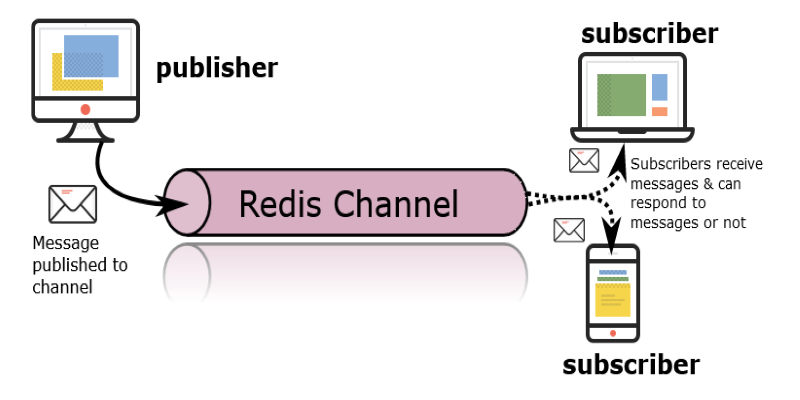
Need instant updates across your app? Learn how Redis Pub/Sub enables real-time messaging with zero setup, no queues, and blazing-fast delivery
Learn the top 5 strategies to implement AI at scale in 2025 and drive real business growth with more innovative technology.
Meta is restructuring its AI division again. Explore what this major shift in the Meta AI division means for its future AI strategy and product goals
Learn how AI is being used by Microsoft Dynamics 365 Copilot to improve customer service, increase productivity, and revolutionize manufacturing support.

Compare Power BI vs Tableau in 2025 to find out which BI tool suits your business better. Explore ease of use, pricing, performance, and visual features in this detailed guide
Learn how AI innovations in the Microsoft Cloud are transforming manufacturing processes, quality, and productivity.

Domino Data Lab joins Nvidia and NetApp to make managing AI projects easier, faster, and more productive for businesses

Discover why technical management continues to play a critical role in today's AI-powered workspaces. Learn how human leadership complements artificial intelligence in modern development teams
How to vibe code with confidence while keeping your applications safe. This guide explains how developers can stay in their creative flow and apply secure coding practices without slowing down productivity or losing rhythm
Not sure how to trust a language model? Learn how to evaluate LLMs for accuracy, reasoning, and task performance—without falling for the hype
Discover how 9 big tech firms are boldly shaping generative AI trends, innovative tools, and the latest industry news.