Advertisement
Virtual interactions often feel flat, missing the warmth and subtlety of face-to-face connection. That’s beginning to change with the arrival of emotionally aware avatars powered by AI avatar generators. These avatars are designed not just to look like people but to feel more like them too — reading emotions, reacting with empathy, and mirroring moods in real time.
Instead of blank stares or canned responses, users now engage with digital companions that can smile when you’re happy, pause when you’re upset, and soften their tone when needed. This technology brings a more human touch to how we communicate online every day.
Emotionally aware avatars are designed to do more than mimic a smile or nod. They combine emotion detection with real-time, thoughtful responses to create a more natural exchange. AI avatar generators train on huge collections of human expressions, tones, and gestures, learning how people show what they feel. But learning is only half the story — these avatars actively react in ways that feel right. If they pick up on sadness, they might soften their gaze. Notice happiness, and their smile brightens.

They pick up on subtle details most don’t even notice — a pause in speech, a quieter tone, a slight frown. A slower, heavier voice might signal frustration, so the avatar responds with patience and calm. Facial recognition and language analysis work together, letting the avatar adapt both what it says and how it says it. Timing matters just as much. An emotionally aware avatar knows when to pause, when to speak more quickly, and when to hold back. These little moments of adjustment make conversations feel less like talking to a program and more like being heard by someone who understands.
The potential of emotionally aware avatars extends into many areas beyond games or virtual worlds. In customer support, they can help reduce frustration by picking up on a client's emotional tone and responding with empathy. This makes conversations smoother and can leave customers feeling heard and understood.
Education is another field where these avatars are making a difference. Acting as tutors or teaching assistants, they can detect when students appear confused or disengaged and adjust their approach accordingly. This keeps learners more engaged while helping them feel supported. Mental health services are also beginning to explore these avatars, using them to provide emotional support in a nonjudgmental manner while encouraging openness.
In virtual meetings, these avatars can reflect the mood of participants, helping teams sense dynamics that might otherwise go unnoticed in a standard video call. For people who find it difficult to express emotions directly, avatars serve as a helpful bridge. They enable users to convey their feelings more easily in professional, social, or even therapeutic settings.
These applications show how emotionally aware avatars enhance communication, where understanding feelings is just as important as understanding words. They make online spaces feel less distant and more connected, supporting better relationships even in digital environments.
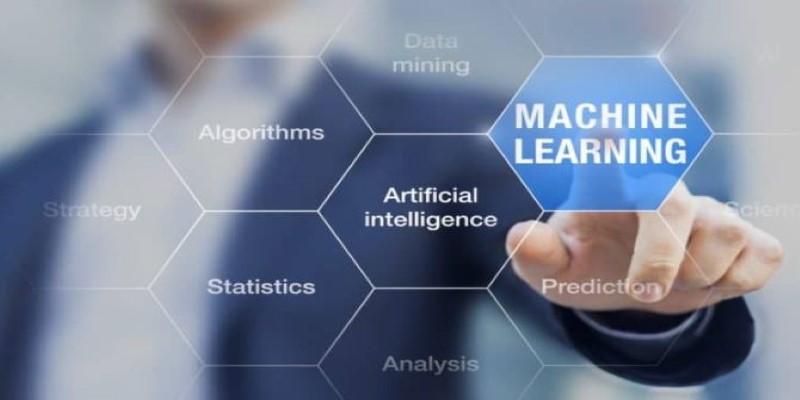
The systems behind emotionally aware avatars rely on sophisticated machine learning models. These models are trained on diverse data that covers a wide range of emotional expressions across cultures, ages, and situations. This helps ensure that avatars can accurately recognize and convey emotions in various contexts. Convolutional neural networks are commonly used to process visual signals, such as facial expressions, while recurrent neural networks analyze speech patterns and text for emotional content.
Continuous learning plays a big role in making avatars more effective. Over time, the avatar adapts to the specific emotional patterns of the person using it, fine-tuning its reactions to feel more personal. Privacy safeguards are built into this process, ensuring that emotional data remains secure and protecting users while allowing the technology to evolve.
Advances in voice synthesis have also improved how avatars sound. They can adjust tone, pitch, and pacing in ways that match their displayed emotions. Combined with more lifelike facial animations, this creates a sense that the avatar is truly engaged in the conversation, rather than just following prewritten scripts.
These technologies are not static. Developers continue refining models to improve subtlety and accuracy while addressing challenges like cultural bias and inconsistent expressions. As a result, emotionally aware avatars are becoming more nuanced and realistic with each generation.
Despite their promise, emotionally aware avatars still face challenges. One of the biggest is accuracy. Misinterpreting a user’s emotions can lead to awkward or even upsetting responses, particularly in sensitive areas like mental health. Cultural differences in how emotions are shown or described can confuse algorithms if their training data isn’t diverse enough.
There are also privacy concerns. Emotional data is highly personal, and it’s important for users to know how it’s handled and have control over what is shared. Developers need to keep transparency and consent at the center of their designs to build trust.
Technically, even the best avatars still sometimes fall into the uncanny valley — close to human but not quite right. This can feel unsettling rather than comforting. Improving the naturalness of animations, timing, and responses will help reduce that effect.
Future development will likely focus on making these avatars more transparent about how they interpret emotions, allowing users to better understand and adjust their input accordingly. More flexible and culturally aware models will help the technology feel inclusive, while ongoing advances in hardware and software will help close the remaining gaps between human and digital communication.
Emotionally aware avatars created by AI-generated avatars are reshaping how people connect in digital spaces. By reading and reflecting on human emotions, they make virtual interactions feel more like real conversations, full of subtlety and empathy. Their uses already span education, customer care, mental health, and workplace collaboration, proving that this technology is more than just a novelty. As developers improve accuracy, respect privacy, and refine emotional nuance, these avatars will continue to make online communication more personal and engaging. With thoughtful progress, they may eventually feel as natural and intuitive as speaking to someone in person.
Advertisement
Learn about the top 5 GenAI trends in 2025 that are reshaping technology, fostering innovation, and changing entire industries.

Learn how AI is being used by Microsoft Dynamics 365 Copilot to improve customer service, increase productivity, and revolutionize manufacturing support.

The UK’s AI Opportunities Action Plan outlines new funding, training, and regulatory measures to boost artificial intelligence innovation. Industry responses highlight optimism and concerns about its impact

Explore the underlying engineering of contextual ASR and how it enables Alexa to understand speech in context, making voice interactions feel more natural and intuitive
Compare Power BI vs Tableau in 2025 to find out which BI tool suits your business better. Explore ease of use, pricing, performance, and visual features in this detailed guide

Apple may seem late to the AI party, but its approach reveals a long-term strategy. Rather than rushing into flashy experiments, Apple focuses on privacy, on-device intelligence, and practical AI integration that fits seamlessly into everyday life

Compare AI, ML, DL, and Generative AI to understand their differences and applications in technology today
Discover how 9 big tech firms are boldly shaping generative AI trends, innovative tools, and the latest industry news.

OpenAI robotics is no longer speculation. From new hires to industry partnerships, OpenAI is preparing to bring its AI into the physical world. Here's what that could mean

Explore how AI is transforming drug discovery by speeding up development and improving treatment success rates.

Create an impressive Artificial Intelligence Specialist resume with this step-by-step guide. Learn how to showcase your skills, projects, and experience to stand out in the AI field

Explore how Nvidia's generative AI suite revolutionizes the Omniverse, enhancing 3D simulations, automation, and efficiency