Advertisement
Engineering is entering a period of change where older methods are falling short of meeting modern needs. At the AWS Summit London, much of the conversation centered on a promising solution: AI-powered simulation. By combining machine learning with advanced modeling, engineers can rethink how they design, test, and refine products.
This approach goes beyond just speeding up processes — it opens doors to solving challenges in smarter, more efficient ways. The summit brought together real-world examples, honest discussion of obstacles, and clear evidence that this technology is reshaping the way engineers work and how industries will move forward.
AI-powered simulation enables engineers to explore designs that would have been too complex or time-consuming in the past. Traditionally, engineering has relied on physical prototypes and manual testing, resulting in slow and costly development. Now, by training machine learning models on large datasets, engineers can run thousands of simulations quickly, gaining insights without physically building every variation.

At the AWS Summit London, several industries shared how they are putting this into practice. In aerospace, engineers are simulating wing structures under a variety of conditions, improving durability and fuel efficiency before producing anything physical. Electric vehicle manufacturers are doing the same with batteries, running countless thermal and structural tests digitally to find designs that improve range and reliability. These examples showed how simulation powered by AI finds relationships and optimizations that human designers often miss, creating better results with less wasted time and material.
Rather than relying on trial and error, engineers are presented with clearer pictures of trade-offs and outcomes, leading to better decisions. This helps companies deliver more sustainable and affordable products while pushing the limits of design. It's not only about faster results but about designing smarter from the very start.
A key theme at the summit was how AI-powered simulation scales to handle larger and more demanding projects. This is where cloud computing becomes central. The scale and speed of these simulations would overwhelm most local hardware, but cloud platforms like AWS make it possible to run them affordably at industrial levels.
Civil engineering firms now simulate how skyscrapers and bridges react to earthquakes or strong winds in the cloud. This allows them to test more scenarios in hours rather than weeks. A faster turnaround frees engineers to focus on creative problem-solving instead of waiting for results. Cloud-based AI tools also facilitate collaboration among distributed teams. Engineers across different countries can access the same models, input their data, and view results without delays, which is especially helpful for global projects where coordination is complex.
Another key benefit discussed at the AWS Summit London was accessibility. Cloud-powered tools lower the barrier to entry for smaller firms that cannot afford their high-performance computing systems. This means companies of all sizes can innovate and compete, making the field more open to new ideas.
While the promise of AI-powered simulation is clear, the AWS Summit London sessions did not shy away from discussing the challenges. One of the most significant is data quality. AI models rely heavily on high-quality, well-structured data to generate accurate simulations. In engineering, collecting such data is not always straightforward. Legacy systems, inconsistent formats, and missing measurements can lead to flawed models that produce unreliable results. Companies need to invest time in cleaning and preparing their data before they can fully benefit.

Another challenge lies in understanding the limitations of AI predictions. Although these simulations are incredibly sophisticated, they are still based on mathematical approximations and cannot capture every real-world variable. Engineers must be cautious not to treat AI outputs as the absolute truth, but rather as a guide to inform their decisions. This requires combining domain expertise with AI tools — a balance that takes time to achieve.
There’s also a cultural shift required within engineering teams. Many professionals are used to traditional methods and may hesitate to trust AI-driven processes. Building confidence in the technology involves showing clear examples of successful applications and offering training to help engineers understand how to use the tools effectively. Companies presenting at the summit shared stories of gradual adoption strategies that helped overcome skepticism and build trust among engineers.
The AWS Summit London made clear that AI-powered simulation is not a passing trend. As cloud computing and machine learning capabilities improve, simulations will become even more accurate, faster, and capable of modeling more complex systems.
One emerging area is real-time simulation. With improvements in connectivity and processing power, engineers may soon be able to adjust designs on the fly as conditions change, which would be transformative for fields such as manufacturing or construction. Another promising development is incorporating environmental considerations into every simulation. With growing awareness of sustainability, engineers are beginning to utilize AI to measure ecological impact alongside performance, helping to create designs that are not only efficient but also more responsible toward the planet.
The summit also highlighted the need for education to evolve. Tomorrow’s engineers will need to combine traditional technical knowledge with fluency in AI tools. Universities and professional training programs will need to keep pace to prepare graduates who are ready for this new way of working.
The AWS Summit London showed how AI-powered simulation is reshaping engineering, moving beyond old limitations and giving engineers better ways to solve problems. The ability to test and optimize more quickly, find hidden efficiencies, and collaborate across distances is already delivering measurable improvements across industries. There are still issues to address, like improving data quality and building trust in predictions, but progress is steady. As more engineers adopt these tools and develop the skills to utilize them effectively, engineering will become more flexible, informed, and capable of addressing today's challenges. AI-powered simulation complements human expertise, giving engineers sharper tools to build what comes next.
Advertisement

Why is Tesla’s Full Self-Driving under federal scrutiny? From erratic braking to missed stops, NHTSA is investigating safety risks in Tesla’s robotaxis. Here’s what the probe is really about—and why it matters

Know the way full-stack data scientists can serve, and deliver machine learning models that make a real business difference

Learn to boost PyTorch with custom kernels, exploring speed gains, risks, and balanced optimization for lasting performance

Discover how an AI platform is transforming newborn eye screening by improving accuracy, reducing costs, and saving live
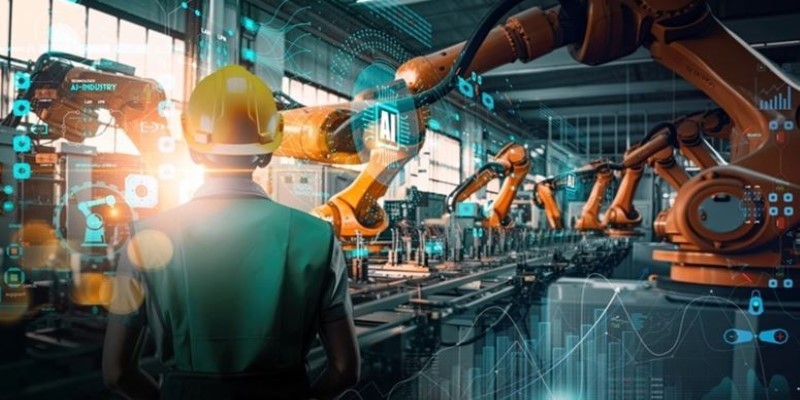
How AI-powered simulation is revolutionizing engineering practices by enabling faster, smarter design and testing. Explore key insights and real-world applications revealed at AWS Summit London

Machine learning is redefining identity theft detection by recognizing behavioral patterns, preventing fraud in real time, and improving accuracy. Discover how this technology helps organizations stay ahead of digital threats while creating a safer online experience for users

Explore how AI is transforming drug discovery by speeding up development and improving treatment success rates.

How to use a Python For Loop with easy-to-follow examples. This beginner-friendly guide walks you through practical ways to write clean, effective loops in Python

How NVIDIA’s Neuralangelo is redefining 3D video reconstruction by converting ordinary 2D videos into detailed, interactive 3D models using advanced AI
AI tools for solo businesses, best AI tools 2025, AI for small business, one-person business tools, AI productivity tools

Create an impressive Artificial Intelligence Specialist resume with this step-by-step guide. Learn how to showcase your skills, projects, and experience to stand out in the AI field

Learn how AI innovations in the Microsoft Cloud are transforming manufacturing processes, quality, and productivity.