Advertisement
One moment they're arm-in-arm, the next, they're not returning each other’s calls—at least that’s how it looks from the outside. The tech industry is watching closely as signs of strain show between Microsoft and OpenAI, two companies whose recent history has been closely intertwined. What started as a multi-billion-dollar partnership built around trust, shared ambition, and cutting-edge AI research now seems to be shifting into something murkier.
Are Microsoft and OpenAI breaking up? The short answer: it’s complicated and much depends on where each of them goes from here. This isn’t just a story about two companies. It’s about where artificial intelligence is headed, who gets to shape it, and how quickly priorities can shift when so much money and power are involved.
When Microsoft invested heavily in OpenAI—first with $1 billion in 2019 and later with a staggering $10 billion—the industry took notice. It wasn't just funding; it was deep integration. Microsoft got exclusive access to OpenAI's models, which it embedded across its product lineup—from Word and Excel to Azure cloud offerings. In return, OpenAI gained access to computing infrastructure that few could afford or scale as fast.
Their OpenAI partnership brought ChatGPT to life on Microsoft platforms and made Azure the official cloud provider for OpenAI. In public, the collaboration looked seamless. Behind the scenes, it was more like a tightrope walk across a canyon filled with ambition, secrecy, and competing priorities.
That relationship worked well for a while. Microsoft got the shiny AI it needed to stay competitive with Google and Amazon. OpenAI got the infrastructure and money to keep pushing the boundaries of large language models.
But even strong partnerships get tested—especially when growth moves faster than trust.
In late 2023, OpenAI entered the public eye for reasons that had little to do with new models. The surprise firing and re-hiring of CEO Sam Altman in under a week created a stir. Microsoft, OpenAI’s most significant partner, was blindsided. In fact, Microsoft CEO Satya Nadella reportedly found out at the same time the rest of the world did—through social media.
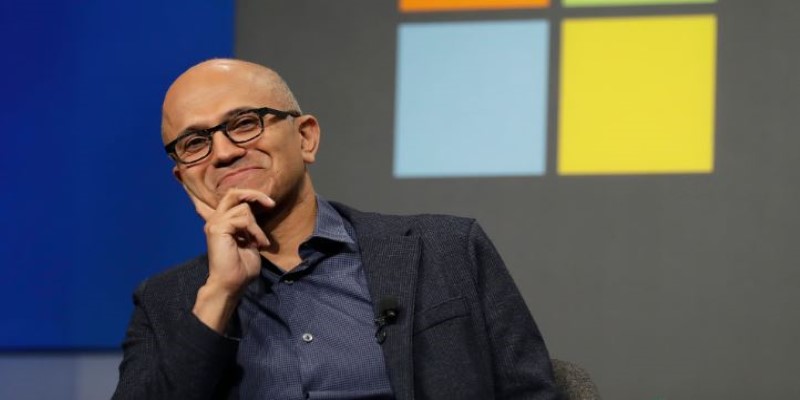
For a company that had invested billions, this lack of communication wasn’t just awkward. It raised real questions about governance, transparency, and control. Microsoft didn’t have a board seat. It didn’t have any formal voting power. And for all its investment, it couldn’t stop one of the most consequential leadership shakeups in tech.
This incident exposed something bigger: OpenAI and Microsoft were not truly aligned in terms of how decisions were made—or who made them.
Then came more signs of divergence. Microsoft quietly started building its own in-house AI team, pulling in researchers and engineers, including some from OpenAI. While the official line was that this was meant to "support" their broader AI goals, it sent a message: Microsoft was preparing for a future where it might need to go solo.
At the same time, OpenAI continued pushing forward with its own commercial offerings, some of which now compete directly with Microsoft's services. ChatGPT is available to users as a standalone platform, separate from Microsoft Copilot. The overlap is growing.
The core of their OpenAI partnership was always tied to infrastructure and exclusivity. Microsoft provides the cloud muscle through Azure, and in return, it gets first dibs on new OpenAI models. But this model becomes tricky when both sides want to commercialize the same technology.
OpenAI makes money by offering direct access to ChatGPT and its API. Microsoft does the same—just through Azure. While they technically serve different audiences (developers vs. enterprise clients), the boundaries are starting to blur. Each company wants to be the one businesses and consumers rely on for generative AI tools. That creates friction.
There's also the question of control. OpenAI is still a nonprofit at its core, with a mission to ensure AI benefits all of humanity. Microsoft is a publicly traded company with shareholder pressure. Their motivations aren’t the same, and as AI grows more capable and more lucrative, those differences become harder to ignore.
And now, with Microsoft hiring aggressively in the AI space and building internal large language models that could rival those of OpenAI, many are asking: Is Microsoft preparing to phase OpenAI out? Or is it simply hedging its bets?
So, are Microsoft and OpenAI breaking up? The relationship hasn’t collapsed, but it’s no longer as tightly bound as it once appeared.
Right now, they still need each other. Microsoft relies on OpenAI’s cutting-edge research to stay ahead in the AI race, and OpenAI still depends on Azure’s computing scale. But that mutual need won’t last forever.
If Microsoft succeeds in building its own foundation models, it could gradually pull away, keeping control of its AI ecosystem without needing to rely on an outside lab. And OpenAI, with growing name recognition and product demand, may look for ways to expand independently, beyond Microsoft's umbrella.
What we’re seeing now is not a breakup, but a realignment. The OpenAI partnership is evolving, maybe fraying at the edges, but not entirely over. Both companies are positioning themselves for the long haul—and that means making sure they can survive without leaning too heavily on the other.
For now, it’s business as usual on the surface. ChatGPT still powers Microsoft products, and Azure still runs OpenAI’s infrastructure. But anyone watching closely can tell that the bond has changed. It’s no longer about shared growth; it’s about strategic distance.
What started as a strong alliance is now a more cautious partnership between Microsoft and OpenAI. They’re still working together, but not as closely as before. The question “Are Microsoft and OpenAI breaking up?” doesn’t have a clear answer, but the tone has shifted from collaboration to strategic distance. With both developing their own AI strengths and interests, a gradual separation feels more likely. Whether it unfolds publicly or quietly, it’s clear the relationship isn’t what it used to be.
Advertisement

Discover why technical management continues to play a critical role in today's AI-powered workspaces. Learn how human leadership complements artificial intelligence in modern development teams

Why is Tesla’s Full Self-Driving under federal scrutiny? From erratic braking to missed stops, NHTSA is investigating safety risks in Tesla’s robotaxis. Here’s what the probe is really about—and why it matters

What happens when AI isn't just helping—but taking over? Amazon CEO Andy Jassy says it's already replacing jobs across operations. Here's what it means for workers and the wider industry

Discover seven powerful ways AI helps manage uncertainty and improve resilience in today's fast-changing business world.

Learn how AI innovations in the Microsoft Cloud are transforming manufacturing processes, quality, and productivity.
LangFlow is a user-friendly interface built on LangChain that lets you create language model applications visually. Reduce development time and test ideas easily with drag-and-drop workflows

Domino Data Lab joins Nvidia and NetApp to make managing AI projects easier, faster, and more productive for businesses
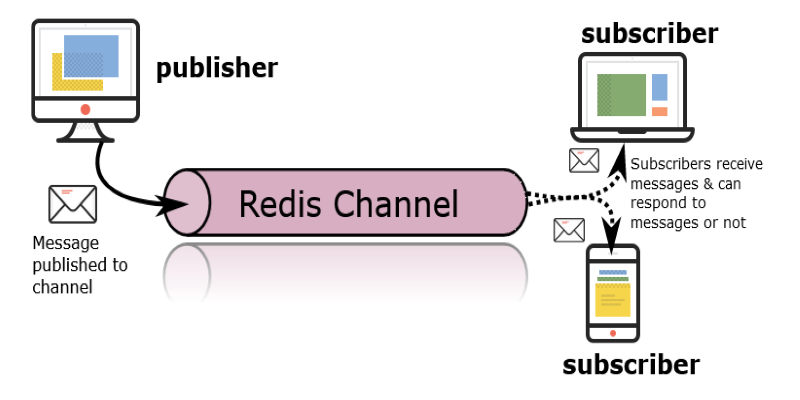
Need instant updates across your app? Learn how Redis Pub/Sub enables real-time messaging with zero setup, no queues, and blazing-fast delivery

Compare AI, ML, DL, and Generative AI to understand their differences and applications in technology today

How computer vision starts with low-level vision tasks like edge detection, denoising, and motion analysis—laying the foundation for higher-level visual understanding
What prompt engineering is, why it matters, and how to write effective AI prompts to get clear, accurate, and useful responses from language models
OpenAI robotics is no longer speculation. From new hires to industry partnerships, OpenAI is preparing to bring its AI into the physical world. Here's what that could mean