Advertisement
In the past, education was a straight path: school, college, maybe graduate studies, and then a job. You learned from teachers, textbooks, and the occasional guest speaker. But when it comes to artificial intelligence, things are shifting fast. Many people looking to build a career in AI are skipping the traditional academic route and turning to tech companies instead.
Not because schools don’t matter, but because they often can’t keep up. In this space, where change is constant and tools evolve every few months, the people defining what matters are often the ones building it.
Universities still give students a strong start in math, computer science, and theory, but that’s only part of what modern AI demands. The field now moves at a pace that traditional systems can’t match. A concept introduced in a freshman course may feel ancient by senior year. Updating a course isn’t as easy as editing a tutorial—professors need to learn new material, seek approval, and wait through administrative steps before any change reaches students. By then, the industry will have already moved on.
Many schools also face resource limits. They may lack the funding, partnerships, or computing infrastructure needed to provide access to large datasets or advanced AI models. Without exposure to real-world tools, classroom learning can start to feel disconnected from the pace of the industry.
This doesn’t make academic education irrelevant—it just means its rhythm is slower. AI demands immediacy, experimentation, and constant updates. That’s why many learners turn to tech companies, where innovation and teaching often happen at the same time.
Companies like Google, Meta, Microsoft, and Amazon aren’t just creating AI tools. They’re teaching people how to use them. They run developer bootcamps, offer free courses, sponsor certifications, publish open-source libraries, and release detailed research papers. Google’s TensorFlow and DeepMind blogs, OpenAI’s documentation, Microsoft’s AI Studio—these are where many learners go for real, usable knowledge.
One reason is access to the newest tools. If you want to work with a language model, you don’t wait for a textbook. You go directly to the model’s creators. Want to fine-tune it? Check their GitHub. Confused about parameters or tokens? Their forums and dev notes probably have your answer.
These companies also understand that if more people learn to use their platforms, they win. Training developers, analysts, and engineers is part of their business strategy. When you learn PyTorch or Hugging Face tools, you become part of an ecosystem. And when thousands of developers are familiar with a company's tools, adoption spreads quickly in businesses that hire them.
In this way, tech companies aren’t replacing schools—they’re building an alternative layer of education that moves at the speed of the industry. It’s self-directed, it’s fast, and it’s focused on practical results.
Learning AI today doesn’t look like sitting in a lecture hall. It looks like watching walkthroughs on YouTube, cloning notebooks from GitHub, and experimenting with prompts in sandbox environments. It means reading blog posts from researchers who just tested a new technique last week and trying it yourself the next day.
AI training now leans heavily on open access. MOOCs, such as Coursera and edX, still matter, but people are increasingly turning to documentation, Discord groups, and tutorials created by fellow developers. The best resources are often free and informal, and the creators aren't always professors. They're practitioners, engineers, and researchers who share as they go.
Internships, hackathons, and open competitions, such as Kaggle, provide applied training that a classroom often can't match. These experiences expose learners to real data problems, teamwork under pressure, and evaluation criteria that mirror industry expectations.
Certification programs by tech firms are also growing in popularity. Amazon Web Services (AWS), Google Cloud, and Microsoft Azure all offer AI and ML certifications. These programs are designed to test hands-on skills and current knowledge, not just theoretical understanding. For many employers, that matters more than a transcript.
This shift doesn’t mean schools are obsolete. They still offer value in areas like theoretical grounding, critical thinking, and long-term research. But learners are increasingly taking control of their education. They might start with a degree and then turn to industry platforms to stay current. Or they might bypass school altogether and prove their skills through projects and certifications.
The best approach may not be choosing between academia and industry, but using both. A strong foundation in linear algebra or ethics from a university can help someone build more thoughtful AI tools. At the same time, a working knowledge of transformer architectures or prompt engineering from a tech platform makes them immediately useful in the job market.
In AI, what you can build often matters more than where you learned to build it. Portfolios, GitHub repos, and contributions to open-source projects carry weight. Demonstrated skill is the new degree in many hiring processes. The learners who blend theory with practice—balancing both structured study and rapid industry learning—are shaping the next generation of AI experts and innovators worldwide.
If your AI education feels more like scrolling through tech blogs than attending lectures, you’re not mistaken. The leading tech companies have quietly become the world’s most active AI teachers, shaping how people learn while setting the pace of innovation. Schools still offer the groundwork in theory and ethics, but the most relevant lessons are emerging from the creators of the technology itself. These companies release tools, tutorials, and updates faster than any curriculum can adapt. In today’s AI world, staying informed means learning directly from those building the future—where the real teaching now happens.
Advertisement

Not sure how to trust a language model? Learn how to evaluate LLMs for accuracy, reasoning, and task performance—without falling for the hype
Explore how AI enhances employee performance, learning, and engagement across today's fast-changing workplace environments.
How an AI avatar generator creates emotionally aware avatars that respond to human feelings with empathy, transforming virtual communication into a more natural and meaningful experience
Microsoft and Nvidia’s AI supercomputer partnership combines Azure and GPUs to speed model training, scale AI, and innovation
Compare Power BI vs Tableau in 2025 to find out which BI tool suits your business better. Explore ease of use, pricing, performance, and visual features in this detailed guide
Discover how AI in weather prediction boosts planning, safety, and decision-making across energy, farming, and disaster response

Machine learning is redefining identity theft detection by recognizing behavioral patterns, preventing fraud in real time, and improving accuracy. Discover how this technology helps organizations stay ahead of digital threats while creating a safer online experience for users
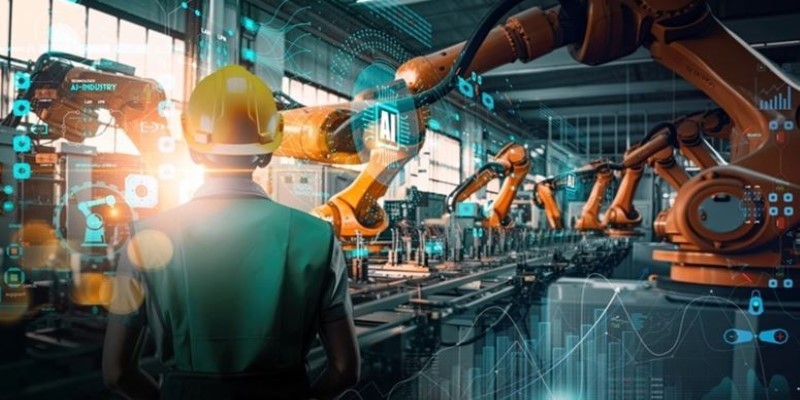
How AI-powered simulation is revolutionizing engineering practices by enabling faster, smarter design and testing. Explore key insights and real-world applications revealed at AWS Summit London
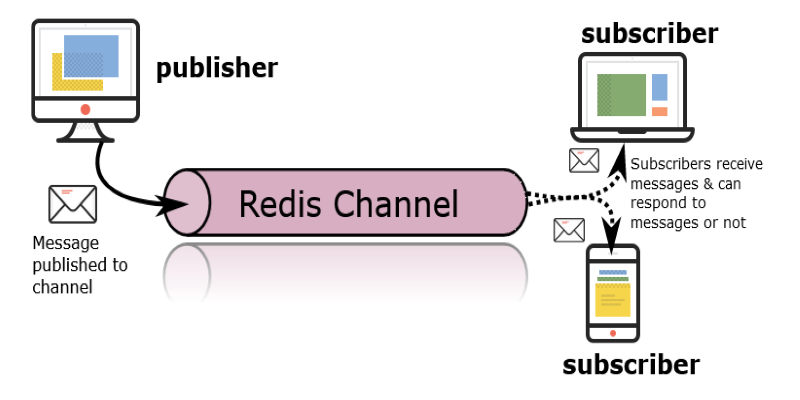
Need instant updates across your app? Learn how Redis Pub/Sub enables real-time messaging with zero setup, no queues, and blazing-fast delivery

Why AI training is increasingly being shaped by tech giants instead of traditional schools. Explore how hands-on learning, tools, and real-time updates from major tech companies are changing the way people build careers in AI

What happens when energy expertise meets AI firepower? Schneider Electric and Nvidia’s partnership is transforming how factories are built and optimized—from virtual twins to real-world learning systems
Apple may seem late to the AI party, but its approach reveals a long-term strategy. Rather than rushing into flashy experiments, Apple focuses on privacy, on-device intelligence, and practical AI integration that fits seamlessly into everyday life